More rebuilding coverage after the Marshall fire
After the Marshall fire, many families learned that their insurance limits were based on what it might have cost to rebuild in 2019. By 2022, the actual cost was much higher.
Colorado now requires insurance companies that sell certain replacement-cost homeowners policies to offer more protection. They must offer ordinance or law coverage of at least 20% of the dwelling limit, up from 10%, and extended replacement cost coverage of at least 50%, up from 20%.
An offer is not the same as coverage. These options are not automatically part of your policy. If you did not buy the endorsement—the document that adds or changes coverage—you may not have that protection. This is a common and costly source of confusion after a fire.
Three types of coverage that are easy to confuse
Replacement cost coverage generally pays to rebuild your house with materials of similar type and quality, up to your dwelling limit. Payment may depend on whether you actually repair or rebuild and spend the money.
Extended replacement cost gives you additional coverage when the dwelling limit is not enough to rebuild. Guaranteed replacement cost is different and is rare. If you believe you have guaranteed replacement coverage, read the policy carefully to see exactly what it promises and what conditions apply.
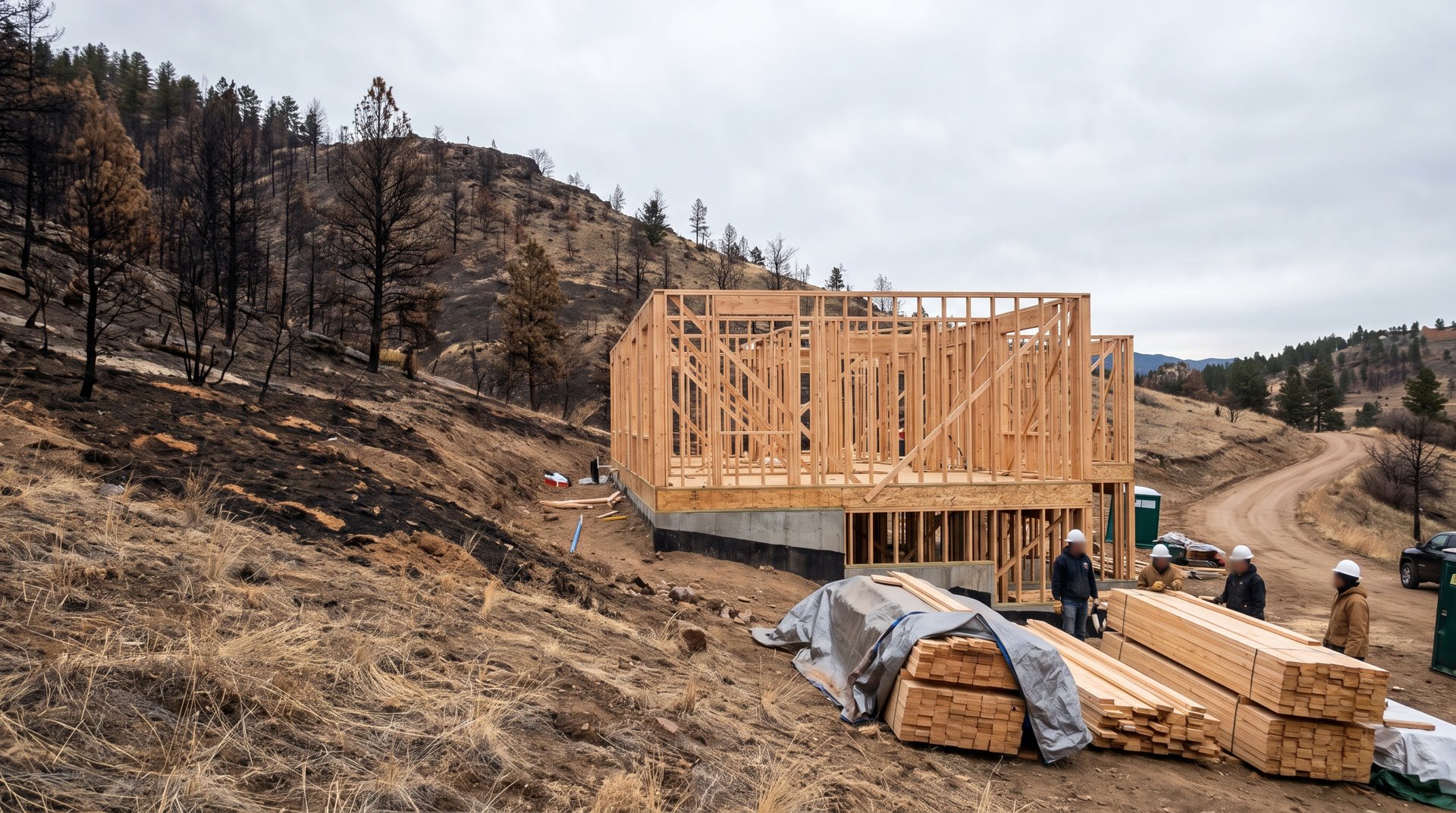
Ordinance or law coverage pays certain added costs required to bring the rebuilt home into compliance with current building codes. The new Wildfire Resiliency Code rules for additions and new work in the Wildland-Urban Interface, often called the WUI, make this coverage more important, not less.
The Colorado Division of Insurance’s wildfire advisory explains the 20% and 50% minimum offers. These requirements apply when an insurance company issues or renews certain replacement-cost policies. They do not automatically apply to FAIR Plan policies, and the coverage is not included simply because you worked with a helpful agent.
Why many Marshall families ran out of coverage
Rebuilding after a major disaster can cost much more than an earlier insurance estimate predicted. When many homes need to be rebuilt at once, the cost of labor, lumber, dumpsters, and temporary housing can rise quickly. A dwelling limit based on a 2018 calculator may not be enough to build a 2026 code-compliant house on a burn site.
Many Marshall policyholders were underinsured. That is a reason to check your declarations page now. This is the summary page that lists your main coverage limits. Look for extended replacement cost coverage and an ordinance or law coverage percentage. If neither appears, ask your insurance company or agent whether you have those coverages.
Aspen Acres, with 324 homes, is facing the same situation. If you have a replacement-cost policy, ask in writing before your next renewal whether extended replacement cost and ordinance coverage were offered at the new minimums and whether you accepted them. If your house is already gone, the claim should focus on the actual cost to rebuild, not only the insurance company’s 2021 estimate.
What to do if you already have a claim
Ask for a complete copy of your policy within three business days. Review Coverage A, which is usually the dwelling coverage, along with any extended replacement cost and ordinance or law coverage.
For example, if ordinance coverage is 10% of a $600,000 dwelling limit, that provides $60,000 for covered building-code costs. A required foundation or roof upgrade could use that amount before the plumber even starts.
Be careful with a dwelling settlement that calls necessary code work “betterment” and says you must pay for it yourself. Take photographs of any red tag, and keep copies of letters or notices from the building department. Put those records in your claim file rather than only sharing them on social media.
- Take a photograph of your declarations page today, even if you have not had a fire.
- At renewal, ask for written offers of extended replacement cost and ordinance or law coverage.
- After a loss, get the complete policy, rebuilding bids, and building-code letters. Do not agree to a settlement until the available ordinance coverage has been addressed.
General information, not legal advice.
If you want help with a claim, Public Insurance Adjusters of Colorado is at 455 Sherman St, #450, Denver, CO 80203, 866-919-1962, https://publicinsuranceadjustersofcolorado.com/contact/