Starting July 1, 2026, Colorado insurance companies must give you more information if they use a wildfire or catastrophe model to set your premium, add a surcharge, or decide not to renew your policy. Under HB25-1182, the company must tell you the score or classification it used.
You can challenge that score if you believe it is wrong or unfair. You can also ask the insurer to explain, in plain language, what steps you could take to improve the score or qualify for a discount.
The law does not guarantee a lower premium. It also does not require an insurance company to keep covering a home in an area it considers high-risk, such as a canyon. Improving your score is one issue. Getting a fair claim payment after a fire is another. It still helps to understand the score law because clear records about your home and its wildfire protection can matter during both renewal and a future claim.
What the law requires
HB25-1182 was signed into law on May 28, 2025. When you apply for coverage, renew a policy, or receive a notice that your policy will not be renewed, the insurer must provide written notice explaining your score or classification, the range used by the model, and how mitigation work might affect the result.
Mitigation means work done to reduce wildfire risk. You may appeal the score, its classification, or a discount connected to mitigation. The insurer must respond within 10 calendar days and make a decision within 30 days.
If the insurer’s model does not consider measures such as defensible space, a Class A roof, ember-resistant vents, or Firewise certification, the company should provide another way to qualify for a discount.
The Colorado Department of Insurance adopted Regulation 5-1-29 for model and discount filings. It takes effect January 1, 2027. You can read the adoption notice.
What to send your insurance company
Give the insurer clear, dated proof of the work you have done. That may include:
- Dated photographs.
- Invoices and receipts.
- Permits.
- A simple map showing the 0–5 foot zone around your home.
- Any community certificates you have.
A conversation with your insurance agent is not enough by itself. Put your request in writing and keep a copy of everything you send.
When renewal approaches, ask in writing for your wildfire risk score and the mitigation factors used under HB25-1182. If the response looks like a standard form letter and does not answer your questions, ask again. A renewal generated before July 1 may not include the new information.
What the law does not do
The law will not prevent nonrenewal if an insurer has decided to leave certain ZIP codes. It will not turn a FAIR Plan policy into a replacement-cost HO-3 policy. It also will not add ordinance coverage after a total loss.
After incidents such as Aspen Acres, Gold Mountain, Ferris, and Snyder, brokers were already seeing insurers stop accepting new policies. More transparency about scoring does not mean insurers will have more capacity or will write more policies.
The Aspen Acres situation also led to Emergency Regulation 26-E-04, dated August 19, 2026, which addresses unfair cancellations. That regulation and the wildfire score law deal with separate issues. If both affect you, raise them separately rather than combining them in one frustrated email.
If you later have a claim
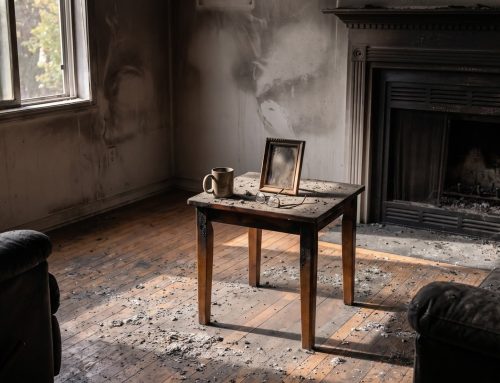
If you lose a score appeal and later have a fire, the insurer’s repair estimate may leave out important costs. These can include code upgrades, smoke damage to the HVAC system, and 24-month ALE. ALE means extra living costs while you cannot stay in the house.
The photographs you took to document mitigation work may also show the condition of your home before the loss. Keep copies outside your home and place them in your claim file if a loss occurs.
If your house has already burned, focus on opening and documenting the claim rather than the wildfire score. Request your policy documents within three business days.
Public Insurance Adjusters of Colorado can review whether you purchased the 50% extended replacement and 20% ordinance options that Colorado now requires insurers to offer on certain replacement-cost policies. An insurer’s offer of this coverage does not mean you bought it. Your declarations page should show what coverage you actually purchased.
Practical next steps
- Send a written request for your wildfire score and the mitigation factors used.
- Keep a folder containing dated proof of your mitigation work.
- Submit any appeal in writing.
- Track the 10-calendar-day response period and the 30-day decision period.
- Save the score, appeal, photographs, and supporting documents for a possible future claim.
- If you have already experienced a loss, concentrate on the claim and consider getting professional help.
For questions about scores and discounts, contact your insurance agent. If the insurer ignores your appeal, you can contact the Colorado Department of Insurance Consumer Services at 303-894-7490. Public Insurance Adjusters of Colorado handles insurance claims, not rating models.
General information, not legal advice.
If you want help with a claim, Public Insurance Adjusters of Colorado is at 455 Sherman St, #450, Denver, CO 80203, 866-919-1962, https://publicinsuranceadjustersofcolorado.com/contact/